
A Fixture of British Democracy
British elections frequently feature candidates in elaborate costumes, a tradition that has become an expected element of the democratic process. These figures, often seen alongside mainstream politicians, use their unique visibility to draw attention to various causes or to offer a satirical take on politics.
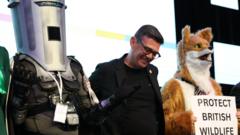
For instance, during a recent Makerfield by-election, Andy Burnham, a prominent Labour figure, shared the stage with individuals dressed as a fox and an "intergalactic space warrior" known as Count Binface. Such scenes are not uncommon, with these distinctive candidates often shaking hands with winners before victory speeches, barely registering as unusual to the public.
Motivations Behind the Masquerade
The reasons for these unconventional campaigns are varied. Many candidates aim to bring overlooked issues into the spotlight, while others use humor and satire to engage with the political landscape. Rob Pownall, who ran for the Makerfield seat dressed as a fox, exemplifies this approach. Pownall, who also heads the advocacy group Protect the Wild, stated his goal was to "shine a light on issues that don't get the headlines." He used the opportunity to speak with Burnham about animal protection, urging action on fox hunting and badger culls.
Pownall's previous campaign for Scottish Parliament saw him dressed as a gannet, protesting the Guga hunt, a centuries-old tradition. He views these costumed appearances as part of Britain's "unique eccentric energy" and a vibrant display of democracy.
The Rise of Iconic Characters
Some costumed candidates have become recurring figures in British politics. Count Binface, for example, has challenged numerous high-profile politicians, including former Prime Ministers Rishi Sunak, Boris Johnson, Theresa May, and London Mayor Sadiq Khan. His manifestos often blend absurdity with genuine concerns, such as calls for "wifi on trains that works" and "trains that work," alongside proposals to cap kebab prices or build affordable housing.
Another long-standing figure is Alan "Howling Laud" Hope, leader of The Official Monster Raving Loony Party. Hope has run in at least 38 elections over four decades, often against prominent political leaders. The party, co-founded by Hope and the late David Sutch (also known as "The Screaming Lord Sutch") in 1982, has fielded over 200 candidates throughout its history.
Influence Beyond the Farce
Despite their often-comedic appearances, these satirical campaigns can have a tangible impact. The Official Monster Raving Loony Party, for instance, has advocated for policies that later became law. Their campaigns in the 1980s for pubs to remain open all day eventually led to changes in licensing laws in 2005. They also championed lowering the voting age to 16, a policy now implemented for some elections in Scotland and Wales, with a bill to extend it across the UK introduced by Labour in February.
The cost to run as a candidate is £500, which is returned if the candidate secures more than 5% of the vote. This rule, introduced in 1985 by Margaret Thatcher's government, aimed to deter frivolous candidacies. However, as noted by then-Home Office Minister David Mellor in 1986, it did not stop figures like Sutch from continuing their costumed campaigns, embracing what he called a landscape of "people dressed like idiots, behaving like idiots and waving idiotic slogans." Mellor concluded, "I think we probably are just going to have to live with this."
Source: Why candidates dress up and run in major UK elections