
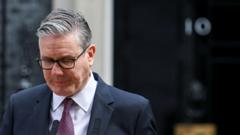
Starmer's Departure and the Path Ahead
Sir Keir Starmer has declared his resignation as the leader of the Labour Party, signaling the end of his tenure at 10 Downing Street. He has committed to serving as the UK Prime Minister until his successor is determined and assumes office.
Reasons Behind the Resignation
Pressure on Sir Keir had been mounting for some time, exacerbated by consistently low approval ratings for both the Labour Party and himself. His leadership faced significant instability earlier in the year following the release of US Department of Justice documents, which revived controversy surrounding his appointment of Peter Mandelson as US ambassador.
A critical by-election defeat in February saw Labour lose a traditionally secure seat to the Greens after Sir Keir reportedly prevented Andy Burnham from standing. This made a series of local and national elections in May a crucial test of his leadership. The results of these May elections were significantly worse than anticipated within the party, leading to the resignation of Wes Streeting as health secretary, alongside several junior ministers. Although Sir Keir initially continued, his authority further diminished when a long-standing dispute over defence spending prompted Labour veteran John Healey to step down as defence secretary earlier this month. Following Burnham's election in Makerfield, Sir Keir initially stated he would contest any leadership challenge but ultimately concluded that Labour MPs desired a different leader for the upcoming general election.
Timeline for a New Leader
The official timetable for the Labour leadership contest is yet to be finalized, with the party stating it will be agreed upon 'shortly.' However, Sir Keir has indicated he will ask Labour's National Executive Committee to open nominations for a new leader on July 9, closing on July 16, coinciding with Parliament's summer recess.
Labour's internal rules stipulate that contenders must secure nominations from 81 Labour MPs, effectively limiting the pool of potential candidates to four. Additionally, candidates need the support of at least 32 of Labour's 634 local branches or three party-affiliated organizations, including two trade unions. Once this nomination period concludes, candidates who meet the threshold will face a vote among party members and affiliated trade union supporters. This process is expected to include a series of party hustings and televised debates throughout the summer, allowing contenders to present their platforms. Sir Keir has suggested that if this schedule is followed, a new leader could be in place by September 1, when Parliament reconvenes after its summer break.
Potential for an Uncontested Leadership
The necessity of a full leadership vote remains uncertain. Andy Burnham, former Greater Manchester mayor, whose recent election as MP for Makerfield paved the way for a leadership bid, has confirmed his intention to run. Conversely, former health secretary Wes Streeting, initially seen as a potential rival, has ruled himself out and endorsed Burnham. Other prospective candidates, such as former deputy leader Angela Rayner, have not yet declared their intentions. Should no other MP enter the race, Burnham could become leader without a vote, accelerating his transition to No. 10.