
A Unique Companion in the City
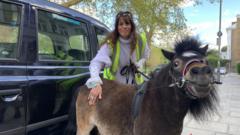
In the bustling environment of south-west London, an uncommon sight has become a source of comfort and connection for many. Rusty, a three-year-old Falabella, one of the world's smallest horse breeds, serves as a registered therapy animal. His owner, Maria Dahl, credits him with significantly improving her quality of life, particularly in managing panic attacks stemming from childhood neglect and PTSD.
Maria, 50, found herself isolated due to debilitating anxiety. After researching equine therapy, she discovered that a horse's heartbeat can synchronize with a human's, which she believes helps regulate her breathing and alleviate panic attacks. "He gives me a life," Maria states, highlighting how Rusty has helped her reintegrate into her community.
Rusty's Special Transport and Expanding Reach
While registered therapy animals are permitted on public transport, Rusty's nervousness has led Maria to arrange a private taxi for his travels across London. This dedicated mode of transport will enable them to reach more locations, with plans to visit a special needs center and a hospice. Rusty also accompanies Maria on personal appointments, such as dentist visits.
Maria observes that Rusty acts as a magnet, attracting people and fostering interactions. She notes the unique benefits of equine therapy, explaining, "When I walk Rusty, he's good for the soul. He helps you if you feel blue, if you just need some clarity or perspective on the trials and tribulations of life, he gives you that."
A New Addition and Community Impact
More recently, Maria's friend Seamus adopted Tayto, a 10-month-old pony, who bears a resemblance to Rusty but is much smaller. Tayto, a rescue animal, had a difficult start, arriving with health issues. Maria hopes Tayto will also become a therapy horse, and Rusty has taken on a mentoring role, guarding and grooming the younger pony, helping him to blossom.
Rusty's presence in London has created a strong sense of community, with people from all walks of life stopping to interact with him. Maria receives Christmas cards for Rusty and believes he facilitates conversations about mental health, a topic she feels is often underserved by resources. She hopes his visibility can encourage more open discussions about individual struggles and the importance of finding solutions.
Expert Insights on Animal-Assisted Therapy
Seamus, 54, a former bricklayer, now trains horses and has been instrumental in helping Maria train Rusty. Children also volunteer with Rusty, with one young volunteer, Leah, noting how her confidence has grown through the experience.
Dr. Tracy King, a chartered clinical psychologist, explains the profound benefits of animal therapy. She highlights how animals offer a calming, non-judgmental presence, which can help individuals feel safer and more grounded, particularly those who are anxious, traumatized, or lonely. Stroking an animal can also stimulate the release of oxytocin, a hormone associated with trust and connection, creating a foundation for subsequent talking therapy.
Source: 'He's a life saver': The miniature therapy horse that travels by taxi