
An Unforeseen Spectacle at Azteca Stadium
In 1986, a 17-year-old, with little interest in football, found herself unexpectedly at the Azteca Stadium in Mexico City. She was about to witness a historic World Cup quarter-final match between Argentina and England, an event that would leave an indelible mark on sporting history, particularly through the actions of Diego Maradona.
The opportunity arose when a family friend offered last-minute tickets. Despite her father's initial concerns regarding potential tensions between Argentinian and English fans, a lingering sentiment from the Falklands War less than five years prior, her mother seized the chance, recognizing it as a once-in-a-lifetime experience for her daughter.
The Atmosphere of the World Cup
The journey to the stadium was electric, filled with car flags and enthusiastic chants. Though Mexico's team had already been eliminated, the excitement of being part of the global event was palpable. The young spectator, treating it more like a social outing than a football match, was more captivated by the festive atmosphere and the diverse crowd than the game itself. She dressed up, applied makeup, and anticipated a stadium filled with international fans rather than focusing on the legendary players.
Inside the Azteca, the sheer scale was overwhelming. The cacophony of sounds, vibrant colors, and the sense of a global gathering left a strong impression. Fans from across the world sang, laughed, and celebrated, creating a memorable experience that initially overshadowed the on-pitch action.
The 'Hand of God' Moment
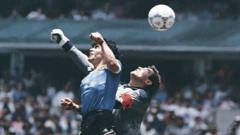
As the match progressed, the spectator was engrossed in the crowd's energy, participating in the Mexican wave. Suddenly, a collective gasp and then a mixture of celebration and confusion erupted. The ball was in the air above England's penalty area. Diego Maradona, Argentina's star, challenged English goalkeeper Peter Shilton. The ball deflected off Maradona and into the net. Initially, it appeared to be a header, but protests from English fans quickly spread. Questions arose: was it a header, or had Maradona used his hand?
A nearby spectator confirmed the suspicion: Maradona had punched the ball into the net, but the referee had missed it, allowing the goal. This controversial moment would later be famously dubbed the 'Hand of God' by Maradona himself, who remarked that the goal was scored "a little bit with my head and a little bit with the hand of God."
The Unforgettable Second Goal
The intensity of the debate surrounding the first goal almost caused the crowd to miss Maradona's second goal, which followed just four minutes later. This goal, however, was a different spectacle. Maradona began in his own half, evading two English players with a pirouette. He then weaved his way up the pitch, dodging tackles, entering England's penalty box, and finally sending the ball into the net. The stadium erupted in universal celebration, even some English fans joining in. This moment, the spectator recalls, truly illuminated the appeal of football.
Reflections on a Historic Day
Argentina ultimately won the match 2-1. Leaving the stadium, the lasting impression for the spectator was not just the game, but the grandeur of the Azteca itself—a place steeped in Mexico's history and a symbol of resilience, having served as a refuge after the 1985 earthquake. The joyous atmosphere outside, with street vendors selling tacos and fruit, enhanced the sense of Mexican pride, embodied even by the playful chilli pepper mascot.
Years later, she fully grasped the significance of what she had witnessed. While football never became her primary passion, that day remained vivid. The 'Hand of God' goal, though controversial and a frequent topic of discussion, particularly between Argentinian and English acquaintances, often overshadowed the sheer brilliance of Maradona's second goal—a feat she would much rather boast about having seen firsthand.
Source: 'I witnessed Maradona's Hand of God' - a goal still talked about 40 years on