
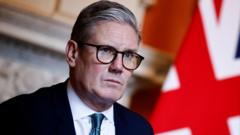
Sir Keir Starmer's Premiership: A Brief Tenure and Shifting Public Perception
Sir Keir Starmer's time as Prime Minister, though initially marked by a significant general election victory, proved to be remarkably short-lived. Less than two years after securing a parliamentary majority, he announced his resignation, acknowledging that his party questioned his leadership for the upcoming general election.
A Landslide Victory with Underlying Challenges
The 2024 election saw Labour achieve a three-figure parliamentary majority, placing Sir Keir in an exclusive group alongside past Labour leaders Tony Blair and Clement Attlee. However, this triumph was built on a historically low share of the national vote. Sir Keir's popularity with the electorate began to decline within weeks of entering Downing Street, a trend attributed to a series of missteps and policy reversals that ultimately led to him becoming Labour's shortest-serving prime minister.
The 'Mr. Rules' Persona and Communication Hurdles
Sir Keir's path to political leadership was unconventional, entering Parliament in his 50s after a distinguished legal career. He presented himself as a pragmatic leader focused on national interest, a style epitomized by his Culture Secretary Lisa Nandy, who referred to him as "Mr. Rules." While he viewed his lack of a defined political ideology as a strength, critics within his party argued he lacked a clear vision and effective communication skills. In an era valuing authenticity, his methodical approach sometimes appeared rigid.
Upon his 2024 election victory, Sir Keir pledged to restore trust in politics and usher in a period of calm, promising a departure from what he termed the "chaos and sleaze" of the previous government. He aimed to "restore service and respect to politics, end the era of noisy performance, tread more lightly on your lives and unite our country."
Early Challenges and Policy Reversals
The initial months of Sir Keir's premiership were met with a brief honeymoon period. He and his Chancellor, Rachel Reeves, highlighted the severity of the economic challenges inherited, signaling a need for tax increases. Sir Keir later conceded this approach might have been a mistake, suggesting they should have offered more optimism to voters.
A pivotal moment in his declining popularity was the government's July 2024 decision to cut winter fuel payments for 10 million pensioners. This move, later identified by pollsters as a turning point, led to a significant drop in his personal ratings. Political strategist John McTernan commented on the lasting negative impression this created. Sir Keir eventually reversed the winter fuel payments decision in May of the following year, by which point a pattern of policy reversals had emerged, contributing to dissatisfaction among both the public and his own MPs. A frequent critique was the perceived absence of a strong sense of purpose or clear objectives for his government, despite efforts to outline "missions" for a fairer, more prosperous Britain.
Background and Political Journey
Born in Oxted, Surrey, Sir Keir's parents, a factory worker and a nurse, instilled in him a focus on social justice. He often spoke of his working-class roots and personal experiences with financial hardship, including utilities being cut off. He excelled academically, becoming the first in his family to attend university, studying law at Leeds and Oxford. His legal career saw him rise to Director of Public Prosecutions in 2008, earning him a knighthood.
He entered politics in 2015, winning the safe Labour seat of Holborn and St Pancras. His early front-bench role as Shadow Immigration Minister under Jeremy Corbyn saw him resign in 2016 following the Brexit referendum, advocating for a new leader. Despite his opposition, he returned to serve as Shadow Brexit Secretary when Corbyn survived the leadership challenge.
Following Corbyn's resignation in 2019, Sir Keir won the Labour leadership on a platform that included left-wing pledges like nationalizing the water industry and abolishing university tuition fees. However, many of these promises were later abandoned, with Sir Keir prioritizing fiscal responsibility to gain voter trust. He also took a firm stance against Corbyn, eventually expelling him from the party over comments regarding antisemitism and barring him from standing as a Labour candidate.
His early tenure as Labour leader, beginning amidst the Covid-19 lockdown, proved challenging. A low point came with the 2021 Hartlepool by-election, where the long-held Labour stronghold fell to the Conservatives. Sir Keir reportedly considered resigning but was persuaded to stay by his aides and wife.
Shifting Fortunes and Later Challenges
Labour's fortunes began to improve, aided by public discontent over pandemic-era Downing Street gatherings and the economic instability caused by Liz Truss's mini-Budget. Sir Keir's strategy of shedding Corbyn-era policies and emphasizing economic stability contributed to Labour's 2024 general election victory, campaigned on the single word "change" and his image of steady competence.
However, his "squeaky clean" image soon faced scrutiny. Three months into his premiership, he repaid over £6,000 in gifts and hospitality, including concert tickets. While within rules, reports of ministers accepting significant gifts from donors raised public concern. This controversy contributed to the resignation of his chief of staff, Sue Gray, amid reports of internal power struggles within Downing Street.
On the international stage, Sir Keir garnered praise for his diplomatic efforts, including an unexpected rapport with US President Donald Trump and a leading role in European negotiations to end the war in Ukraine. However, his frequent foreign trips led some critics to label him "never here Keir." Domestically, his government faced doctor strikes, an increase in Channel migrant crossings, and persistent cost-of-living pressures exacerbated by global conflicts. Despite prioritizing economic growth, it remained sluggish. These challenges, coupled with government missteps, were capitalized on by Reform UK, which surpassed Labour in polls in spring 2025 and maintained its lead, achieving electoral successes at Labour's expense.
Source: Top lawyer whose 'Mr Rules' approach failed to connect with the public