
New US Health Aid Strategy Sparks Debate in Africa
The Trump administration is proposing substantial financial assistance to African nations for healthcare infrastructure and disease combat, following the restructuring of the primary US foreign aid body last year. However, these new agreements come with specific conditions, leading to resistance from some governments on the continent.
Last December, the initial deal was signed by Kenyan President William Ruto in Washington. US Secretary of State Marco Rubio expressed optimism, hoping it would be the first of many such agreements. Despite this, the landmark $2.5 billion deal with Kenya faced delays due to legal challenges from activists, though cabinet ministers ultimately approved it recently.
Following his inauguration, President Donald Trump closed the US Agency for International Development (USAID), citing inefficiencies. This move significantly impacted health programs in some African countries that relied on American funding. The State Department's revised global health strategy mandates recipient governments to increase their own health spending, aiming to foster self-sufficient and sustainable health systems. For instance, the US is contributing $1.6 billion to the Kenya deal, with Kenya committing $850 million over five years.
The Trump administration's approach seeks to move away from traditional donor-NGO relationships, which it claims fostered dependency and increased overheads. Instead, it aims to partner directly with national leaderships. Secretary Rubio stated that aid would not merely be distributed to NGOs imposing programs, but would help countries build their own capacity and capabilities.
Shift from Global Cooperation to Bilateral Agreements
This new strategy signifies a departure from a global cooperation model centered on the World Health Organization (WHO), favoring direct agreements with individual governments that align with US strategic and commercial interests. The US withdrew from the WHO earlier this year, citing disproportionate funding contributions, alleged mismanagement of the COVID-19 crisis, lack of transparency, and susceptibility to political influence.
A contentious aspect of these bilateral deals is an explicit commitment to prioritize US pharmaceutical and medical firms for developing and delivering treatments. According to the policy document, US global health foreign assistance is viewed not merely as aid, but as a strategic tool to advance bilateral interests worldwide.
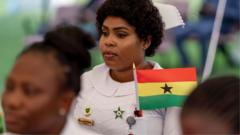
By mid-May, 32 countries, including at least 20 in Africa, had accepted these health Memorandums of Understanding (MOUs). However, some nations like Ghana, Zimbabwe, and Zambia have declined to sign, citing various concerns.
Data Protection and Economic Linkages Raise Objections
In Zambia, Foreign Minister Mulambo Haimbe criticized what he perceived as an attempt by the US to link health funding with US economic interests, specifically by connecting the deal to a separate agreement granting Washington access to critical minerals. Haimbe indicated that Zambia wished to discuss these agreements independently. A State Department spokesperson, when questioned, emphasized an 'America First' stance, stating that US foreign assistance is strategic capital invested to advance US interests, and recipient nations are expected to prioritize American strategic and commercial objectives.
Further illustrating this approach, the US recently announced a complete withdrawal of funding for HIV/AIDS programs in South Africa. An administration official linked this decision to Pretoria's alleged 'failure to make demonstrable progress on policy requests,' which reportedly included the treatment of the white-minority Afrikaner community, a claim of 'white genocide' in South Africa that has been widely discredited.
Concerns over US access to health data, including patient information and biological resources (pathogens), have also prompted reservations among some African countries during negotiations. A Kenyan court initially suspended its country's deal due to legal challenges regarding patient privacy.
Arnold Kavaarpuo, Executive Director of Ghana's Data Protection Commission, informed the BBC that Ghana rejected its proposed deal over similar data protection concerns. He noted that the agreement would involve Ghana generating and sharing data with US authorities without reciprocal measures for Ghanaian data protection and sovereignty. Zimbabwe also cited concerns about requests for medical data, presumably for US pharmaceutical companies, as a reason for rejecting a deal. The country's spokesman highlighted the existing WHO system for data sharing and benefit from future pandemic treatments.
While the US maintains that data and specimen sharing are crucial for scientific development and cooperation, a State Department spokesperson stated that the requested material is aggregated and de-identified data, similar to what has been used for years in fighting infectious diseases. However, Nelson Aghogho Evaborhene, a PhD fellow in global health governance, suggests that while the previous relationship was unequal, it was politically tolerable as altruistic. The current context, he argues, is characterized by more transactional leverage.
Many African nations have also learned from the COVID-19 pandemic, where the value of pathogen data became evident, but the continent struggled to secure vaccine doses. Aggrey Aluso, Executive Director of Resilience Action Network Africa (Rana), believes Africa possesses valuable information that can contribute to the global health security ecosystem. Rana, along with over 50 civil society groups, issued an open letter warning African leaders that US terms were not aligned with African national or regional interests, a sentiment echoed by South Africa's Health Minister, Dr. Aaron Motsoaledi, who questioned acceding to requests for pathogens and genomes in exchange for five years of funding.
Impact on Ebola Response
The debate surrounding health diplomacy has been underscored by a recent Ebola outbreak in the Democratic Republic of Congo (DRC). The DRC was an early adopter of the new US health deals, and the US claims the agreement is aiding Kinshasa's response. However, humanitarian workers and former US health officials argue that significant US aid cuts to the DRC and the WHO severely weakened the front-line response.
Amadou Bocoum, Care's country director in DRC, reported having to lay off a third of his staff, including those involved in community mobilization and Ebola prevention, due to USAID cuts. He stated that the lack of staffing and emergency stock when the new Ebola outbreak occurred led to delays in distributing critical supplies. Jeremy Konyndyk, who led USAID's response to the 2014 Ebola epidemic, suggested that a fully funded network of health partners might have detected the outbreak sooner.
The US denies that its cuts have hindered efforts, asserting that its new arrangements are more 'aligned and effective,' pointing to a $270 million donation to combat the epidemic. The administration's deals aim to encourage national governments to increase their own health spending, despite a historically poor record of this in Africa. However, critics like Dr. Kevin DeCock, a former director at the US Centers for Disease Control (CDC), warn that a bilateral approach to global health risks ignoring collective, transnational challenges inherent in global health problems.
Source: Original Article