
Burnham's Potential Challenge to Starmer's Leadership
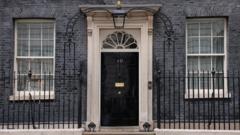
Andy Burnham is widely expected to contend for the Labour Party leadership against Sir Keir Starmer. This development follows Burnham's significant win in the Makerfield by-election. Should Burnham succeed in his challenge, he would assume the role of prime minister without the necessity of a general election, replacing Sir Keir Starmer in Downing Street. Sir Keir has, however, affirmed his intention to defend his position and continue as prime minister if he prevails in any leadership contest.
Factors Leading to a Leadership Challenge
Sir Keir Starmer's leadership has faced increasing scrutiny, particularly after the Labour Party's disappointing performance in May's local elections. The party lost nearly 1,500 councillors in England, ceded power in Wales, and recorded its poorest result ever in the Scottish Parliament elections. This poor showing has prompted more than 90 Labour MPs to publicly call for Sir Keer's immediate resignation or a clear exit timeline. Conversely, over 150 MPs have either expressed support for Sir Keir or believe that the current climate is not suitable for a leadership contest.
Discontent predates the local elections, stemming partly from Sir Keir's swift reversals on three key policies within a month due to internal party pressure. Questions also arose regarding his judgment and the Downing Street operation following his appointment of Lord Mandelson as British ambassador to the US. Lord Mandelson was later dismissed after new information emerged concerning his ties to the late convicted sex offender Jeffrey Epstein.
The Mechanics of a Labour Leadership Challenge
For a leadership election to be triggered, 20% of Labour MPs must back a challenger. With 403 Labour MPs, this translates to support from 81 members. Once initiated, other candidates can join the race if they also secure 81 endorsements. Sir Keir Starmer would automatically be included on the ballot if he chooses to contest, and he would remain prime minister throughout the process. Historically, no Labour prime minister has ever faced a formal leadership challenge from within their own parliamentary party.
How the Vote Works
Labour Party members and affiliated trade union supporters cast their votes by ranking candidates in order of preference. If a candidate secures over 50% of first-preference votes, they are declared the winner. If not, the candidate with the fewest first-preference votes is eliminated, and their voters' second choices are redistributed. This elimination process continues until one candidate achieves more than half of the votes. The National Executive Committee (NEC), Labour's decision-making body, would determine the timetable for the ballot. For instance, the 2020 leadership contest, triggered by Jeremy Corbyn's resignation, involved a six-week ballot period after nominations were secured.
Potential Contenders for Labour Leader and Prime Minister
Key figures widely considered as potential challengers to Sir Keir include:
- Wes Streeting: The former Health Secretary publicly expressed a loss of confidence in the prime minister and has confirmed his intention to enter any leadership contest. Streeting is recognized as a strong communicator within the cabinet and highlights a reduction in NHS waiting lists as a government achievement.
- Andy Burnham: Burnham advocates for Labour to "change if we are to regain people's trust." Having served as an MP from 2001 to 2017 and as a minister under Sir Tony Blair and Gordon Brown, he previously ran unsuccessfully for Labour leadership twice while the party was in opposition. He left Westminster to become Mayor of Greater Manchester in 2021, a position he was re-elected to in 2024. His recent Makerfield by-election win has opened the door for a leadership challenge.
- Angela Rayner: Favored by some on the party's left, Rayner advocates for increased economic powers for regional mayors and a higher minimum wage. She stated, "We are in danger of becoming a party of the well-off, not working people." In 2025, she resigned as deputy prime minister amid accusations of not paying sufficient tax on a new home. However, she has since paid £40,000 in unpaid stamp duty and asserts that HMRC has "exonerated" her from deliberately avoiding tax.
Scenarios if Starmer Resigns
Should Sir Keir Starmer choose to resign, he could remain in office during a transition period before handing over to his successor, who would become both Labour leader and prime minister. If he were to resign immediately, a cabinet member would assume a caretaker role, a decision made by the cabinet in consultation with the NEC. The Deputy Prime Minister, David Lammy, would not automatically fill this caretaker position. A leadership contest would then ensue, requiring each challenger to secure support from 20% of Labour MPs and either 5% of Constituency Labour Parties (CLPs) or at least three affiliated organizations (with two being trade unions).
The Possibility of a General Election
The winner of a Labour leadership election would automatically become prime minister without a general election. However, the prime minister must maintain the "confidence" of the House of Commons, meaning they need the support of a majority of MPs. If the leader of the opposition, currently the Conservative Kemi Badenoch, were to introduce a motion of no confidence, the government would typically provide time for a debate and vote. A successful motion, requiring just one more vote in favor than against, would usually lead to a general election. Given that 403 of Westminster's 650 MPs are Labour, it is highly improbable that enough Labour MPs would support such a motion for it to succeed.
Source: What is Burnham's path to becoming Labour leader and PM?