
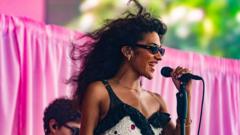
The Rise of the Unfiltered Artist
In today's music landscape, artists who present themselves as authentic, raw, and unfiltered are finding significant success, particularly among female singers. Figures like Olivia Rodrigo, Lola Young, and Olivia Dean have garnered millions of fans and prestigious awards through their relatable lyrics and genuine online presence. This trend suggests a notable change in the music industry, moving from a system largely controlled by record labels and managers to one where artists appear to dictate their own narratives.
While the extent of this authenticity can sometimes be ambiguous—even Rodrigo has acknowledged that not all her songs are purely autobiographical—the demand for a confessional style is evident. BBC Newsbeat has explored this phenomenon, speaking with artists and industry professionals about the opportunities, demands, and challenges it presents.
The Appeal of Personal Expression
Alessi Rose, a British singer and BBC Radio 1 Sound of 2026 nominee, observes that pop music historically wasn't a platform for deep personal reflection. "Now there are so many pop stars that speak about things that are so personal and so intricate and niche," she tells Newsbeat, highlighting the relatability many find in such content. Rose, whose poetic songs explore heartbreak and self-doubt, has even been compared to Olivia Rodrigo.
Stevie Red McMinn, a record label owner and artist coach, believes fans desire "more transparency" and "something to feel real and raw" from artists. He notes that a decade ago, record labels had greater control over an artist's public image. Social media has since democratized this process, allowing artists to connect directly with fans without traditional intermediaries.
Navigating Online Presence and Boundaries
Alessi Rose embraces her authentic online persona, acknowledging that it can lead to both "excessive levels of positivity, but also criticism." However, she prefers this direct engagement to constantly trying to control public perception. Singer-songwriter Erin Le Count also leverages social media, building a devoted fanbase with her alt-pop sound and casual, selfie-style videos. She focuses on being "creative" and "joyful" rather than meticulously crafting an authentic image, though McMinn points out that even this approach can curate a distinct brand.
While sharing personal details can deeply engage fans, it also raises questions about parasocial relationships, where fans feel an intimate connection with artists they don't personally know. London-born singer-songwriter Rachel Chinouriri emphasizes the importance of authenticity but also advocates for setting personal boundaries. She advises artists to be genuine without feeling obligated to disclose every aspect of their lives online.
The increasing prevalence of artificial intelligence in online content and music also plays a role. McMinn suggests that fans have become more discerning and knowledgeable about the music industry's inner workings. He encourages artists to be unapologetically honest, but only if it feels genuine to them, emphasizing that performative authenticity is unlikely to be beneficial in the long run.
Source: Real, raw and unfiltered? Authenticity helps female singers rule the charts