
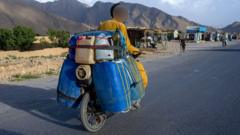
The Perilous Journey of Fuel Smugglers in Balochistan
In Pakistan's largest and most impoverished province, Balochistan, thousands are engaged in the hazardous trade of smuggling fuel from Iran. This illicit activity, a decades-old practice, has reportedly intensified in recent months, driven by escalating fuel prices and a disruption of oil flows through the Strait of Hormuz, linked to heightened tensions between the US, Israel, and Iran.
Individuals like Mazaar (name changed for safety), a father and main provider for his family, navigate perilous routes on motorbikes heavily laden with plastic canisters of fuel. His bike, carrying approximately 272kg (600 pounds) of petrol, travels hundreds of kilometers through some of the world's hottest regions. Temperatures in Balochistan can soar to 50C (120F), causing fuel containers to swell and risk rupture, leading to potential fires or explosions that frequently claim the lives of smugglers.
Beyond the Heat: Conflict and Economic Desperation
The dangers extend beyond the extreme weather. Balochistan has long been a site of conflict between Pakistani forces and separatist insurgent groups, adding another layer of risk for those transporting fuel. Despite these life-threatening conditions, many, like Mazaar, express a lack of alternatives. "We do this because we don't have any other option," he stated, highlighting the scarcity of employment opportunities.
Mazaar, who recently turned to smuggling after drought rendered his farming livelihood unsustainable, is one of an estimated 2.4 million people in Balochistan involved in this trade. A leaked Pakistani intelligence report, cited by Nikkei Asia, suggests that fuel worth approximately $1 billion is smuggled from Iran into Pakistan annually.
Impact on Pakistan's Economy and Official Response
The surge in smuggled fuel has had a significant impact on Pakistan's legitimate oil industry. Major oil refineries and the Oil Companies Advisory Council have appealed to the government, noting a 27-year low in official petroleum sales, partly attributed to the influx of cheaper, illicit fuel. While fuel smuggling is illegal in Pakistan, with penalties ranging from fines to imprisonment, local leaders argue it is an economic necessity in a region with high poverty and limited job prospects, even for university graduates.
Irfan (name changed for safety), another smuggler with a disability from polio, exemplifies the desperation. He transports diesel, which he considers safer than petrol, stating, "I can't carry petrol because what if it catches fire? If I can't stand up, I'll get badly burned."
Complexities and Allegations
The issue is further complicated by allegations of complicity. Smugglers claim that Pakistani officials and security forces often accept bribes to overlook the illegal trade. The Pakistani government, however, denies these claims and states that Prime Minister Shehbaz Sharif has directed law enforcement to crack down on fuel smuggling, reporting seizures worth nearly $5 million in the past year. Pakistan also faces a delicate diplomatic balance, mediating between Iran and the US while grappling with this cross-border issue.
Iran attributes the smuggling to criminal organizations, taking advantage of its subsidized domestic fuel prices. However, Paddy Ginn of the Global Initiative Against Transnational Organised Crime suggests that primary traffickers may be linked to or part of the Islamic Revolutionary Guards Corps (IRGC), aiming to circumvent US sanctions and profit from rising fuel prices.
For smugglers like Mazaar, the recent international conflicts have only intensified their struggle. The price he pays for smuggled petrol has increased, but his selling price remains stagnant, significantly reducing his daily earnings. Despite the constant threat of injury or death, he maintains a fatalistic perspective: "I have to die one day anyway... That is Allah's decision, whether he lets me live or takes my life."
Source: The bikers battling extreme heat and armed conflict to smuggle Iranian fuel to Pakistan