
Unofficial Brands Gain Unexpected Visibility at World Cup
Despite FIFA's stringent measures to ensure only official partners receive exposure at the World Cup, several non-sponsoring brands have become prominent talking points. Companies like Levi's, Heinz, and Beats, which did not pay for official sponsorship, have found themselves at the center of an unexpected narrative, arguably generating more buzz than some official partners.
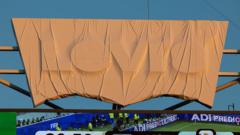
Examples of this phenomenon include the Levi's logo being covered at a stadium in San Francisco, Heinz ketchup bottles having their logos taped over in press boxes, and German player Jamal Musiala photographed with the Beats logo on his headphones obscured by tape.
The 'Streisand Effect' in Action
This situation exemplifies the 'Streisand Effect,' a concept named after Barbra Streisand, whose attempt to remove photographs of her home from the internet inadvertently led to their wider dissemination. When efforts are made to suppress information or visibility, it can paradoxically increase public awareness and interest. FIFA's attempts to control brand exposure appear to be experiencing this effect in real-time.
Protecting Official Sponsors, Not Petty Suppression
FIFA's actions are not arbitrary; they are a strategic measure to protect the significant investments made by official sponsors. These partners pay substantial sums, often tens of millions of pounds, for exclusive rights to associate with the World Cup. Part of this agreement includes safeguarding them from other brands seeking similar exposure without financial commitment. The underlying principle is that if all brands could gain visibility for free, the value of paid exclusivity would diminish.
To maintain this exclusivity, FIFA employs a comprehensive system that includes renaming stadiums, regulating what players and fans can wear, and protecting specific language and typography associated with the tournament. However, brands consistently seek alternative avenues to engage with the audience, a practice known as ambush marketing.
FIFA's Ongoing Battle Against Ambush Marketing
The fight against ambush marketing is not new for FIFA, dating back to 1994. Notable instances include:
- 2006: Dutch fans were instructed to remove trousers bearing the Bavaria beer logo, an unofficial sponsor, before entering a stadium. The incident gained global attention, generating free publicity for Bavaria.
- 2010: South African airline Kulula was compelled to withdraw an advertisement that subtly referenced the World Cup without explicit naming. The withdrawal itself created more publicity than the original campaign.
- 2014: While Sony was an official sponsor, Beats by Dre, a banned brand, saw its headphones worn by star players in various uncontrolled settings, such as team buses and training sessions. Beats further capitalized on this by releasing a five-minute advertisement, effectively overshadowing Sony's paid exclusivity.
In these cases, the enforcement efforts, rather than the intended sponsors or excluded brands, often became the central story.
Brands Turn Restriction into Opportunity
The intriguing aspect of these situations is how the targeted brands leverage the restrictions. Heinz transformed its taped-up ketchup bottle into a limited-edition product. Beats posted Jamal Musiala's photo with the obscured logo, teasing a new headphone model. Levi's, without initiating a stunt, benefited from FIFA covering its logo, generating millions of views and interactions on social media. The brand subsequently rolled out the 'tarped logo' concept in its stores globally, effectively turning a restriction into a global marketing campaign.
FIFA's enforcement, therefore, is not only generating publicity but also providing content that these brands can amplify, turning a perceived negative into a marketing advantage.
Sponsorship vs. Ambush Marketing: Different Objectives
It might seem that ambush marketing is more effective than official sponsorship, but this overlooks a crucial distinction. Brands like Levi's, Beats, and Heinz gain attention, while official sponsors aim for a different set of benefits. Official partners receive exclusive rights, access, activation opportunities, hospitality, and the powerful association with one of the world's largest sporting events—benefits that are challenging to replicate through ambush tactics.
Therefore, sponsorship and ambush marketing are not directly competing for the same objectives. One seeks to 'own' the event, while the other aims to 'join the conversation.' While ambush marketing can capture immediate attention during the tournament, official sponsorship often secures lasting brand memory. The ultimate impact of these strategies will only become clear long after the World Cup trophy is awarded and the temporary covers are removed.
Source: How brands banned from the World Cup became the story