
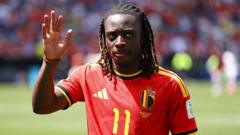
Doku Prioritizes Family Over World Cup Commitments
Manchester City's Jeremy Doku has publicly stated his intention to prioritize the birth of his first child next month, even if it means departing the Belgium national team during the World Cup. The 24-year-old winger's stance has garnered significant attention and widespread support.
The discussion intensified following comments made by L'Equipe channel presenter France Pierron, who criticized Doku's decision, describing a father's presence at birth as "completely useless" and the event itself as a "disgusting moment." L'Equipe subsequently issued an apology, stating Pierron's remarks were "very far removed" from the channel's values. Pierron also apologized, and reports indicated she would not host her show on Monday.
Widespread Support for Doku's Choice
The football community, alongside other organizations, swiftly rallied behind Doku. England striker Ollie Watkins, a father of two, strongly condemned the labeling of childbirth as "disgusting." He emphasized the unique and irreplaceable nature of witnessing the birth of a first child, acknowledging the sacrifices players often make regarding family time.
"It only happens once - welcoming your first child to the world - and it is a blessing. There's a lot of times where you're away from family and friends during the season and it's very difficult, so to miss that would be tough and I see where he's coming from."
The Professional Footballers' Association (PFA) also weighed in, advocating for players to be supported in balancing professional duties with significant life events. A PFA spokesperson highlighted the importance of "supporting players as people, not just athletes," to foster a healthy professional environment.
Jeremy Davies, deputy chief executive of The Fatherhood Institute, drew a comparison to "gladiators in the Colosseum," suggesting that while athletes are seen as heroic figures for entertainment, some life events hold far greater value than financial compensation.
Regulations and Precedents
While FIFA regulations mandate a minimum of 14 weeks of paid maternity leave for female footballers, there are no specific provisions for paternity leave in the men's game, leaving players to navigate these personal and professional commitments. However, there are numerous instances where players and even managers have prioritized family during childbirth.
- In 2018, Fabian Delph left England's World Cup camp to attend the birth of his daughter.
- David Silva missed Manchester City matches for the premature birth of his son in 2018.
- Former Manchester United goalkeeper David de Gea received extended leave during the pandemic for his daughter's birth in 2021.
Conversely, some players have had to witness these moments remotely. Norway defender Leo Ostigard and Ruben Neves both watched their sons' births via FaceTime or phone due to professional commitments and travel restrictions.
Former Brentford and Tottenham manager Thomas Frank, now a BBC Sport pundit, strongly supports players attending childbirth. "Football is the most important of not important things - so it is not important at a time like this," he remarked, adding that a player returning after being present for the birth would be "absolutely on top of the world."
Similar Scenarios in Other Sports
The debate extends beyond football, with other sports figures also making similar choices:
- Cricketer Jamie Smith missed an England Test match in 2024 for his daughter's birth.
- Sir James Anderson flew back from the Ashes in 2010 for his second child's birth.
- Basketball player Anthony Edwards left a game at half-time in 2024 for his daughter's birth.
- Tennis star Sir Andy Murray stated in 2016 he would leave the Australian Open if his wife went into labor, prioritizing the birth over the tournament.
However, darts player Rob Cross famously missed his third child's birth in 2017 to qualify for a tournament.
Source: BBC Sport