
Australian Energy Grid Sees Potential Shift with Battery Growth
Recent analyses indicate that the widespread adoption of home battery systems across Australia could mitigate the need for extensive new electricity transmission infrastructure. This development comes even as forecasts predict a substantial rise in overall power demand over the coming decades.
Projected Energy Demand and Battery Impact
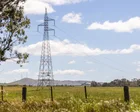
According to modeling conducted by the Australian Energy Market Operator (AEMO), Australia's electricity consumption is anticipated to nearly double by the year 2050. Traditionally, such a significant increase would necessitate considerable investment in expanding and upgrading the national transmission grid, including the construction of numerous new power lines.
However, the rapid growth in the number of residential batteries connected to the national power grid is presenting an alternative scenario. These distributed energy storage solutions can help manage demand peaks, store surplus renewable energy, and provide localized power, potentially reducing the strain on the centralized transmission network.
Cost Savings and Grid Resilience
The implications of this trend are potentially positive for consumers and the energy sector alike. By lessening the requirement for new, large-scale transmission projects, there could be significant cost savings, as the construction of such infrastructure is often expensive and time-consuming. Furthermore, a more decentralized energy system, supported by home batteries, could enhance the resilience and stability of the power grid, making it less vulnerable to large-scale outages.
This shift suggests an evolving landscape for Australia's energy future, where consumer-level technology plays an increasingly vital role in shaping national infrastructure needs and energy policy.
Source: Original Article