
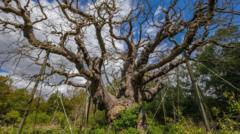
Major Oak Reaches End of Life in Sherwood Forest
The Major Oak, an ancient tree nestled in Nottinghamshire's Sherwood Forest and famously linked to the legend of Robin Hood, is believed to have died. Experts from the Royal Society for the Protection of Birds (RSPB), which manages the forest, confirmed the tree's demise after it showed no new leaves this spring, marking its first such season without foliage in hundreds of years.
Estimated to be between 800 and 1,200 years old, the Major Oak was considered one of Britain's largest oak trees. Despite conservation efforts to safeguard the natural giant, which drew millions of tourists over its lifespan, it had been in decline in recent years.
Factors Contributing to the Oak's Demise
While an exact cause for the Major Oak's death is difficult to determine, the RSPB suggests a combination of factors. These include years of "well-intentioned structural intervention and huge amounts of human activity" around the tree, which are thought to be significant contributors. Additionally, the impacts of climate change, such as recent heatwaves and droughts, exacerbated the challenges the ancient tree naturally faced due to its age.
Ed Pyne, a senior conservation adviser for the Woodland Trust, described the Major Oak as "one of the country's most important trees." He noted that without the pressures of climate change and two centuries of tourist footfall compacting the soil, the tree might have lived for hundreds more years, as trees "do not die of old age." Chloe Ryder, RSPB Sherwood Forest estates operations manager, echoed these sentiments, highlighting the complex causes and the impact of tourism on soil compaction.
A Legacy Beyond Life
Despite its death, the Major Oak will remain in place within Sherwood Forest, serving as both a crucial habitat for wildlife and a "natural monument" for visitors. Saplings cultivated from the tree have been planted globally, ensuring its genetic legacy continues.
Legend holds that the outlaw Robin Hood utilized the Major Oak's hollow trunk, a feature caused by fungi, as a hideout. The tree acquired its enduring name, "Major Oak," after being documented in a 1790 book by Major Hayman Rooke, a former British Army soldier residing near Sherwood Forest. This publication is credited with sparking the initial wave of tourism to the forest and its renowned tree.
Dame Judi Dench, a patron and ambassador for the Woodland Trust, paid tribute to the Major Oak, stating, "The Major Oak has provided inspiration for countless stories, poems, paintings and people for more than 1,000 years - all the while itself teeming with life and providing a home to an enormous range of wildlife." She urged individuals inspired by the tree to contact their MPs to advocate for enhanced legal protections for such iconic and vital components of the national landscape.
The tree's distinctive long limbs, expansive canopy, and hollow trunk, with a circumference of approximately 11 meters, have made it an iconic landmark. Early conservation efforts included supporting larger branches, which, while intended to help, may have inadvertently contributed to its decline. More recent work focused on alleviating soil compaction caused by visitors, which hindered water penetration and nutrient absorption by the tree's roots.
Simon Parfey, a specialist in soil microbiology who was part of the expert team caring for the tree since 2021, noted that the soil around the tree was "under far greater stress than anyone had initially realised." He believes the lessons learned from the Major Oak will be invaluable for the conservation of other ancient trees across Britain, stating, "The Major Oak's true legacy is no longer just in folklore, but in the future of conservation."