
Japan Reconsiders Pacifist Stance for Regional Stability
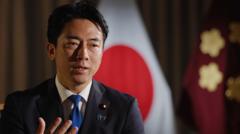
Japan's Defense Minister, Shinjiro Koizumi, has emphasized the critical need for the nation to enhance its defense capabilities, signaling a potential departure from the pacifist principles that have guided the country since the end of World War Two. In an interview with the BBC, Koizumi stated that strengthening defense, reinforcing the alliance with the United States, and expanding collaborations with like-minded countries are essential for establishing a robust, multi-layered deterrence to prevent conflict in the region.
This strategic shift includes significant changes to Japan's defense policy, such as the relaxation of long-standing arms export regulations. For the first time in approximately 50 years, Tokyo can now sell or transfer defense equipment and lethal weapons to 17 countries with which it has formal agreements, including the US and the UK. Koizumi highlighted new opportunities for defense trade, noting Australia's selection of Japanese warships and ongoing discussions with the Philippines for used destroyers. Indonesia and New Zealand have also expressed interest in acquiring Japanese destroyers, a development he described as unprecedented in the Indo-Pacific.
Addressing Regional Tensions and Constitutional Debates
Defense has become a top priority for the current administration, which has committed to historic spending increases. These reforms are deemed necessary in an increasingly tense region, marked by China's growing global influence and North Korea's persistent nuclear ambitions, including ballistic missile tests over Japan.
Prime Minister Sanae Takaichi, who assumed office in October 2025, has advocated for revising Article 9 of Japan's constitution. This article renounces war as a sovereign right and prohibits the maintenance of land, sea, and air forces. Koizumi supports this revision, arguing that the security environment has dramatically changed over the past eight decades, necessitating adaptation for Japan to maintain peace. Similar calls for constitutional revision have been made by previous leaders, including Nobusuke Kishi, Junichiro Koizumi, and Shinzo Abe, but the current acceleration under Takaichi has sparked significant anti-war protests.
"Speaking not as defence minister but as a member of parliament, Japan has not amended its Constitution even once since World War Two. Given how dramatically the security environment has changed, we need to adapt to those changes if Japan is to remain peaceful." - Shinjiro Koizumi
Beijing represents a major challenge, particularly with its claims over Taiwan and the territorial dispute concerning the Senkaku/Diaoyu Islands in the East China Sea. These islands form part of the 'First Island Chain,' a strategic barrier between China's coastal waters and the wider Pacific. Japan's Defence Ministry has identified China's military activities as the "greatest strategic challenge" in its recent white paper.
Koizumi has rebutted Beijing's accusations of Japan engaging in "new militarism," instead expressing serious concern over China's "huge arsenal" of weapons. Despite these differences, Japan remains open to dialogue with China, with Koizumi emphasizing the importance of continued engagement to address differing viewpoints.
The Role of the Self-Defense Forces and International Alliances
Koizumi also addressed the need to clarify the status of Japan's Self-Defense Forces (SDF), which, while operationally functioning as a military, are not legally or politically recognized as such. He believes the SDF should be able to operate with pride and honor, supported by robust defense capabilities in the current security landscape. Critics, however, argue that formally recognizing or expanding the SDF could undermine the pacifist spirit of Article 9, with some suggesting that current constitutional provisions are sufficient for defensive operations.
The US-Japan security alliance, established after WWII, remains a cornerstone of Japan's defense, with approximately 50,000 US troops stationed in the country. However, recent US administrations, particularly under President Trump, have advocated for greater burden-sharing among allies, urging them to increase their own defense spending. In response, Prime Minister Takaichi has raised Japan's defense spending to 2% of GDP, double the long-standing post-war benchmark. This increased budget will be invested in new surface-to-ship missiles and unmanned drones for land and underwater deployment.
Analysts suggest that Japan's defense industry, particularly in shipbuilding and electronic systems, could become more competitive globally. Koizumi believes Japan can make unique contributions to regional security, not solely through its alliance with the US, but also through an independent role. "It's our country. We need to protect it," he stated.
Source: Japan ramping up defence is 'critical' to prevent war, defence minister tells BBC