
Luka Modric: From War-Torn Childhood to Global Icon
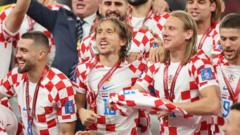
Luka Modric, the illustrious Croatian footballer, continues to defy expectations, leading his national team at the age of 40. His journey, marked by six Champions League titles with Real Madrid and a Ballon d'Or, began far more humbly. Romeo Jozak, a key figure in Croatian football development, recalls Modric as a young, skinny teenager whose focus on his hair once clashed with coaching demands. Jozak, who playfully recounts making Modric cut his hair, now recognizes the superstar he helped nurture. Modric's early life was profoundly shaped by the Croatian War of Independence, where he lived as a refugee after his family home was burned and his grandfather was killed. This background is often cited as a source of the resilience and determination that defines both Modric and the Croatian national team.
Croatia's Rise on the International Stage
Croatia's footballing narrative is one of a small nation consistently punching above its weight. Admitted to FIFA in 1992, the national team quickly made an impact, with a 'golden generation' reaching the Euro 96 quarter-finals and a third-place finish at the 1998 World Cup. Jozak suggests that while the war instilled a certain drive, the primary motivation for players is immense pride in representing their country of less than four million people, coupled with a growing self-confidence derived from their achievements against larger nations.
"Pride initially came from the country, from the patriotic things that we've had in the past regarding the war. Yes, we're a small country, but lately with the results we've had and even we have with the youth, it is not only pride, it's self-confidence."
Developing Talent: The Dinamo Zagreb Model
Jozak's influence extends beyond Modric. As technical director of the Croatian Football Federation and in various roles at Dinamo Zagreb, he was instrumental in creating a system that fostered elite talent. Modric, initially overlooked by other clubs, joined Dinamo at 16. Despite his small stature, coaches recognized his reliability and fighting spirit. Jozak attributes Modric's tough personality to his loan spell in the Bosnian Premier League, describing it as a period that made him "literally survived."
Dinamo Zagreb became a renowned talent factory under Jozak's guidance, emphasizing intense internal competition among young players. This environment, where "survival" was key in training, pushed individuals to excel. The club produced numerous international stars, including Mateo Kovacic and Joško Gvardiol. Gvardiol, for instance, was developed as a midfielder or number 10, which Jozak credits for his exceptional left foot and technical skill. Almost half of the current World Cup squad has passed through the Zagreb club, showcasing the effectiveness of this development model.
Coaching and Culture: The Pillars of Success
Beyond individual clubs, Jozak worked to build a cohesive national development strategy, fostering collaboration between all clubs and the national team. He stresses the importance of having the right coaches and instilling a deep appreciation for the ball from a young age. The Croatian league, while competitive, also serves as a crucial platform for young talents before they move to top European leagues.
Head coach Zlatko Dalic, appointed in 2017, is credited with harnessing this talent and guiding Croatia to a World Cup final in 2018 and a third-place finish in 2022. Jozak praises Dalic's ability to understand the emotional and social dynamics of the team, maintaining strong relationships and fostering a passionate, patriotic, and disciplined environment. This deep emotional connection and collective drive are considered central to Croatia's sustained success.