
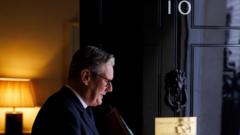
Anticipation Builds in Downing Street
For the third time in four years, the political landscape is dominated by the prospect of a sitting Prime Minister announcing their departure, not due to an electoral defeat, but from a loss of confidence within their own party. Many observers, both within the government and the broader Labour Party, anticipate such an announcement from Sir Keir Starmer, potentially as early as this morning.
This scenario brings to mind previous transitions. Just four years ago, Boris Johnson, despite initially vowing to continue, saw his capacity to govern erode, leading to his resignation in July 2022. He announced his reluctant departure from Downing Street after his own MPs withdrew their support. Three months later, Liz Truss faced a similar fate, stepping down after losing the backing of her party members.
Sir Keir Starmer's Dwindling Authority
Now, the focus shifts to Sir Keir, less than two years into his premiership. For months, his authority has been perceived as waning by many within his party. He has reportedly attempted to solidify his position, making it clear through close associates that he would contest any leadership challenge. He also reportedly blocked Andy Burnham's initial attempt to secure a Westminster seat earlier this year and, as recently as last week, indicated that Burnham's priority should be helping Labour win the Greater Manchester mayoralty he vacated, and offered him a cabinet position.
However, Burnham's recent victory in the Makerfield by-election, and its significant margin, appears to have unleashed pent-up dissent within the Labour Party. Not only is Burnham now an MP, but his success, even in a region where he enjoys strong popularity, has demonstrated his ability to outperform Reform UK. This has led many Labour MPs, concerned about Reform's growing popularity and recent electoral gains, to view Burnham as a more viable leader than Sir Keir.
Prime Minister's Limited Options
The Prime Minister spent the weekend considering his options, reportedly aware that they were rapidly diminishing. It is understood that at least four cabinet ministers, including the Home and Foreign Secretaries, have advised Sir Keir to establish a timeline for his departure. Maintaining them in their roles while disregarding their demands is seen as untenable.
One potential course of action for Sir Keir is to dismiss these dissenting ministers, replace them, and attempt to continue governing, even as a strong contender for his succession heads towards Westminster. Burnham is expected to be sworn in as an MP on Monday afternoon, with a planned photo opportunity with Labour MPs. However, the Prime Minister's announcement could precede this.
Alternatively, Sir Keir could take control of the situation by setting a timetable for his own exit. The question then becomes the duration of his remaining tenure. Some within the party advocate for a leadership contest to rigorously test Burnham and other potential candidates. Others express concern that such a contest could appear self-indulgent, unnecessary, and prolong the process throughout the summer.
An alternative favored by some Labour MPs involves a process primarily among them, with hustings in Westminster, but without a full vote involving trade unions and party members. In this scenario, a new Prime Minister could potentially be in place within one to two weeks, or even sooner if Burnham's momentum proves overwhelming.
Source: Chris Mason: All eyes on Downing Street - what does the PM say, and when?