
US Announces Ceasefire Amidst Ongoing Tensions
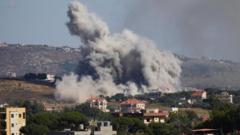
A United States official has indicated that an agreement for a ceasefire has been reached between Israel and Hezbollah. This announcement comes after a period of heightened conflict, including significant Israeli airstrikes in southern Lebanon that local authorities claim resulted in 47 fatalities.
The reported agreement follows international concerns that ongoing hostilities, which also saw Hezbollah claim the lives of four Israeli soldiers in Lebanon, could jeopardize a broader deal between the US and Iran aimed at de-escalation.
Conflicting Reports on Ground Realities
Despite the US assertion of a ceasefire, the situation on the ground remains contentious. Rescue personnel in the Lebanese city of Nabatieh informed the BBC of at least 12 airstrikes occurring after the ceasefire was scheduled to commence at 16:00 local time (13:00 GMT). An Israeli military spokesperson stated that the military would "continue to remove immediate threats," while Hezbollah's secretary-general, Sheikh Naim Qassem, declared that "The project to eliminate Hezbollah has failed."
This escalation poses challenges to the existing Memorandum of Understanding (MoU) which aimed to establish a ceasefire in Lebanon and between the US and Iran. Tehran has accused the US of failing to control Israel, an argument seemingly bolstered by US President Donald Trump's criticisms of Israeli Prime Minister Benjamin Netanyahu regarding civilian casualties.
Hardliners and Domestic Pressures
The fragility of the ceasefire is further highlighted by statements from hardline factions on both sides. Following the deaths of Israeli soldiers, Israel's far-right National Security Minister Itamar Ben Gvir reportedly stated, "Lebanon must burn... For every tear shed by an Israeli mother, 1,000 Lebanese mothers must weep." In response, Iranian Foreign Minister Abbas Araghchi attributed any breaches of the MoU to the US, accusing Israel of desiring "permanent war."
Both Netanyahu and Hezbollah face domestic pressures. Netanyahu has been urged to continue military actions against Hezbollah, while the Iran-backed group has pledged to persist with attacks as long as Israel's presence in southern Lebanon continues.
Humanitarian Impact and Skepticism
The recent flare-up saw Hezbollah report ambushing an Israeli group in southern Lebanon, destroying tanks and targeting troops, resulting in the death of four soldiers, including a battalion commander. Lebanon's health ministry reported 47 fatalities and 97 injuries from Israeli airstrikes, including women and children, with specific incidents noted in Harouf, Haboush, and al-Duweir in the Nabatieh district.
The news of a ceasefire has been met with skepticism among displaced Lebanese citizens, who express doubts about Israel's adherence to such agreements. One individual conveyed to Reuters, "The agreement is good, and we all want an agreement, but the Israelis don't abide by it. How many times have they made agreements? More than once, they don't commit."
Since the latest conflict began, over 3,900 people have reportedly died, and more than 11,600 have been wounded. Approximately a million people remain displaced, and numerous communities in southern Lebanon have been destroyed.
Source: Israel and Hezbollah agree ceasefire, US says, as more Lebanon strikes reported