
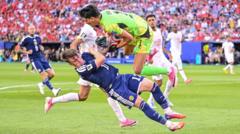
Scotland's Shift in Strategy Under Clarke
In a recent World Cup match against Morocco, Scotland's head coach, Steve Clarke, showcased a notable departure from his previously perceived cautious management style. As the game entered its crucial final stages, Clarke opted for an aggressive, risk-taking approach, introducing multiple attacking players in an effort to secure a point.
While Scotland ultimately suffered a 1-0 defeat, the narrow margin is considered less detrimental in the broader context of goal difference, which could be vital for third-placed teams vying for knockout stage qualification. The loss, however, visibly impacted the Scottish players, with figures like Lewis Ferguson, Andy Robertson, and Lyndon Dykes displaying evident frustration.
Controversial Moments and Moroccan Dominance
The match was not without its contentious moments, as Scotland had two penalty appeals, one for Scott McTominay and another for John McGinn, both of which were denied. These decisions likely contributed to the team's sense of injustice.
Morocco, ranked sixth globally and unbeaten for two and a half years (excluding the Africa Cup of Nations), initially dominated the game. They scored just 71 seconds into the match through Ismael Saibari, assisted by Brahim Diaz, after a tactical gamble by Clarke to play Kieran Tierney ahead of Robertson on the left flank did not pay off.
For much of the first half, Morocco controlled the play, creating numerous dangerous opportunities. Their fluid movement and technical skill put Scotland under immense pressure, leading many to anticipate a more significant defeat.
Scotland's Resilient Comeback
Despite the early setback and sustained Moroccan pressure, Scotland exhibited remarkable resilience. Their defense held firm, with key contributions from Jack Hendry and a crucial save by Angus Gunn, preventing Morocco from extending their lead beyond the single goal. As Morocco's intensity waned towards the end of the first half, Scotland began to find their footing, gradually building confidence.
In the second half, Clarke's decision to bring on attacking players like Ben Gannon-Doak, Dykes, and Ross Stewart, pushing Scott McTominay further forward, signaled a clear intent to fight back. Although Scotland did not manage a shot on target, they created several late chances, demonstrating a newfound attacking impetus absent in previous critical matches, such as their Euro exit against Hungary.
This aggressive push, while leaving them exposed defensively, highlighted a significant learning curve for the Scottish team, who were determined not to 'die wondering'. The final minutes saw frantic action, with Morocco's defenders visibly stressed as Scotland pressed relentlessly.
Looking Ahead
While the defeat was painful, Scotland's display of character and fighting spirit has kept their World Cup knockout hopes alive. They face Brazil next and will carry the belief that their resilience can see them through the group stage, potentially needing just one more point or relying on their strong goal difference. The team's performance, though flawed, showcased a relentless determination that could prove crucial in their tournament journey.
Source: Flawed but relentless Scotland show themselves as men of substance