
High Court Sides with Prison Officials on Religious Freedom Law
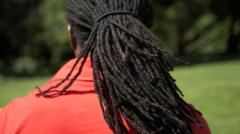
The U.S. Supreme Court has issued a ruling stating that a former Louisiana inmate is unable to sue individual prison officials for monetary damages after his dreadlocks were forcibly cut. The inmate, Damon Landor, contended that the action violated his Rastafarian faith.
Federal Law's Scope Limited
In a 6-3 decision, the Court concluded that the Religious Land Use and Institutionalized Persons Act (RLUIPA) of 2000 does not permit lawsuits against individual state employees in their personal capacities. The justices reasoned that state employees did not implicitly consent to such lawsuits when Congress enacted the federal religious freedom statute.
This particular ruling diverges from several recent Supreme Court decisions that have generally favored religious liberty claims.
Incident Details and Religious Significance
The incident occurred in 2020 while Landor was incarcerated on a drug-related charge. He was reportedly handcuffed to a chair and had his head shaved after he asserted that the act would infringe upon his religious rights as a Rastafarian. Landor expressed to USA Today that his dreadlocks are "a part of me and part of who I am," and that the act of cutting them felt like "they cut off my crown." For Rastafarians, growing uncut, uncombed hair into dreadlocks symbolizes devotion and spiritual development.
Judicial Perspectives
The majority opinion, delivered by conservative Justice Neil Gorsuch, stated that RLUIPA, which applies to local prisons receiving federal funds, does not authorize legal challenges against individual officials. Gorsuch wrote, "Under the Spending Clause, Congress lacks regulatory authority to impose liability on them directly and must depend instead on consent."
Conversely, liberal Justice Ketanji Brown Jackson, in her dissenting opinion, argued that RLUIPA's primary objective was to "ensure that state and local prisons respect prisoners' right to religious exercise."
Source: US top court says Rastafarian man cannot sue prison guards who cut his dreadlocks