
Taiwan's Agriculture Ministry Issues Warning
Taiwan's agriculture ministry has expressed apprehension regarding China's recent commitment to import more atemoya, a hybrid custard apple species primarily grown in Taiwan's Taitung county. The ministry characterized Beijing's strategy as a “classic example of China's ‘raise, trap, kill’ process,” suggesting it aims to cultivate reliance among farmers before exposing them to market fluctuations.
Economic Tactics Amidst Cross-Strait Tensions
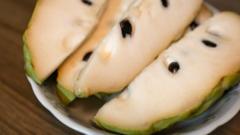
Atemoya, known for its creamy white flesh and rough green exterior, is a significant agricultural export for Taiwan, with China being a major buyer. This development unfolds against a backdrop of heightened tensions, as Beijing, which claims Taiwan as its territory, has reportedly employed various non-military tactics, including economic measures, to exert pressure on the self-governed island.
Observers point to past instances, such as China's 2021 ban on Taiwanese pineapple imports, which significantly impacted farmers and led to a domestic movement to support local produce. The current situation with atemoya is drawing parallels, with some arguing it represents a similar form of economic coercion.
"First, China makes large purchases to show goodwill and encourage farmers to grow atemoyas. Next it unilaterally imposes export restrictions without warning," the Taiwanese agriculture ministry said.
The ministry highlighted that China suspended atemoya imports in 2021 due to alleged pest concerns, partially resumed them in 2023, and then imposed taxes on the fruit in 2024. These actions, the ministry stated, introduce significant instability and risk for the industry and its farmers. Furthermore, China's own expanding atemoya cultivation is seen as a potential threat to Taiwan's domestic industry.
Political Divisions Over Trade Strategy
The debate intensified following a forum in Xiamen, China, where Chinese companies pledged to increase purchases of various Taiwanese exports, including atemoya, fish, and tea. This forum saw attendance from Taiwanese business leaders and opposition politicians, despite an official ban from Taiwan's central government. Taiwan's Mainland Affairs Council has since indicated that officials who participated in the forum could face investigation.
In response, Taiwan's agriculture ministry affirmed its commitment to “sustainable agricultural development and stable income for farmers” and pledged to guide the atemoya industry toward diversification, including the production of frozen fruit products, purees, and wines.
However, lawmakers from the opposition Kuomintang party have criticized these warnings, viewing them as an attempt to politicize the atemoya industry, which they argue could ultimately harm local farmers. Taipei Mayor Chiang Wan-an likened the atemoya to the "TSMC of the fruit world," referencing Taiwan's renowned semiconductor industry, and asserted the fruit's unique quality.
Source: China's import of custard apples is sparking fears in Taiwan