
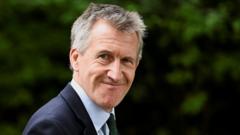
New UK Defence Secretary Faces Scrutiny at NATO
Dan Jarvis, the newly appointed UK Defence Secretary, attended a meeting with NATO allies in Brussels, facing questions about the United Kingdom's long-term military spending plan, which remains unreleased. His arrival coincides with heightened calls from NATO leadership for member nations to present robust strategies for increasing defence expenditure.
Allies Urge Clear Investment Strategies
NATO General Secretary Mark Rutte has emphasized the need for alliance members to outline "clear, concrete and credible plans" for boosting defence spending in advance of a summit scheduled for July 7. Similarly, US Defence Secretary Pete Hegseth voiced criticism, noting that some NATO members have "yet to show a credible path" toward higher defence investment.
Jarvis arrived at the meeting without the details of the UK's long-delayed Defence Investment Plan (DIP) having been published. This comes amid warnings from defence officials about the critical need for additional funding.
Predecessor's Resignation and Funding Concerns
Jarvis's predecessor, John Healey, resigned last week, stating that the proposed DIP "falls well short" of what is required for UK defence. While the UK government has committed to increasing defence spending to 3.5% of GDP by 2035, aligning with NATO commitments, Healey argued that the DIP presented to him only outlined "a rise at 0.08% from next year to 2030," lacking a clear timeline to reach 3% or 3.5%. He also criticized the plan for being "backloaded" when immediate readiness was paramount.
Air Chief Marshal Sir Richard Knighton, the chief of the defence staff, echoed these concerns, cautioning that the armed forces might need to scale back training and operations if they do not receive more funding than currently proposed. The DIP, initially anticipated in autumn 2025 and then expected last week, was further delayed following Healey's resignation.
Ongoing Government Deliberations
Discussions regarding defence spending are ongoing within the UK government. Prime Minister Sir Keir Starmer indicated that Jarvis now has "his own thoughts on what the priorities should be," though Downing Street has not suggested that extra funds will be allocated. Jarvis did not mention the DIP when addressing reporters before the NATO defence ministers' meeting, instead focusing on the challenging international security landscape and the importance of supporting Ukraine.
US Defence Secretary Hegseth, at the summit's opening, reiterated his criticism of NATO countries not demonstrating how they will meet spending targets. He stated that "some of Nato's largest economies, some of our richest countries... still seem to think the era of free-riding is here." Hegseth also announced a six-month review of America's military presence in Europe, aiming for Europe to take a leading role in its own security. He added that future US annual NATO contributions would be contingent on other nations meeting their defence spending targets.
"Where other allies do not spend with urgency, our dues contributions will go down. Nato will be a two-way street."
– Pete Hegseth, US Defence Secretary
Reports suggest the UK government was preparing to announce a £13.5 billion funding increase for the Ministry of Defence (MoD) over the next four years, which is less than the £28 billion the department had requested. Sir Keir Starmer has indicated that "hard-edged" choices have been made, including cuts across all departments to fund defence.
Rupert Pearce, the UK national armaments director at the MoD, described the DIP's delay as "regrettable" and warned that diverting funds from sectors like energy or transport to defence could impede economic growth, potentially impacting the defence budget itself, which is calculated as a percentage of national income.
NATO's Ambitious Spending Target
On the eve of the meeting, NATO General Secretary Rutte reiterated the alliance's goal for members to increase defence spending to 5% of GDP by 2035, ahead of the NATO summit in Ankara, Turkey. This commitment includes a 3.5% GDP core defence spending target and a 1.5% GDP commitment to broader resilience spending.
"Investing 5% of GDP in defence by 2035. That's what we agreed. So, I expect nations to present clear, concrete and credible plans to reach that goal."
– Mark Rutte, NATO General Secretary
The UK government has stated its intention to publish its DIP before next month's summit, detailing how new equipment and defence infrastructure will be funded over the next decade.
Source: New UK defence secretary meets Nato allies without investment plan in place