
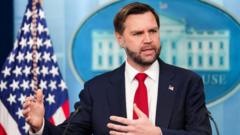
High-Level Discussions Postponed
Scheduled direct talks between the United States and Iran have been put on hold after US Vice-President JD Vance canceled his trip to Switzerland. The White House announced late Thursday that Vance would not be attending the planned discussions, citing complexities with logistical arrangements. This development follows a recent agreement between the two countries, which included the US lifting its naval blockade against Iran.
Uncertainty Surrounds Next Steps
The negotiations were intended to be "technical discussions" regarding the implementation of the recently signed agreement. However, the White House stated that plans for the talks had "not been finalized" but expressed anticipation for "beginning technical talks as soon as possible." The Swiss foreign ministry confirmed the postponement of the talks, which were slated to occur at the Burgenstock mountaintop resort, while noting that preparations were still underway.
These discussions were expected to focus on the practical application of the agreement and initiate conversations on longer-term issues, particularly Iran's nuclear program.
Key Aspects of the Recent Agreement
The comprehensive 14-point deal includes several significant provisions:
- Reopening of the Strait of Hormuz.
- A commitment from Iran to never possess nuclear weapons.
- A $300 billion reconstruction plan for Iran.
- Termination of "all types of sanctions" on Iran by the US.
The agreement also mandates that both parties reach a final deal within a maximum of 60 days, with the possibility of extensions by mutual consent.
Reactions from Key Figures
Iran's Supreme Leader, Mojtaba Khamenei, indicated his approval of the deal with the US despite holding a "different view," suggesting that former President Trump had utilized "all kinds of leverage" to secure it. Khamenei affirmed that future "in-person negotiations" would occur between Tehran and Washington but clarified this would not signify "acceptance of the enemy's position."
Meanwhile, US President Donald Trump, in a post on Truth Social, expressed his expectation for a ceasefire to take effect "on all fronts," specifically mentioning the conflict between Israel and Hezbollah in Lebanon.
Ongoing Tensions in Lebanon
The postponement of talks also coincides with renewed violence in Lebanon. Lebanon's health ministry reported that Israeli strikes killed at least 18 people in the southern part of the country overnight. The Israeli military stated its targets were infrastructure and individuals associated with the Iran-backed group Hezbollah, confirming the deaths of four of its own soldiers. Hezbollah-linked Lebanese media had previously suggested the talks were suspended due to these ongoing Israeli air strikes.
Iran has consistently demanded the inclusion of Lebanon in any ceasefire, a stance Israel has rejected, arguing its conflict with Hezbollah is distinct from its engagement with Iran. Hezbollah has also voiced its rejection of the terms outlined in the US-Iran agreement. The recently signed deal calls for a permanent cessation of conflict and the safeguarding of Lebanon's territorial integrity and sovereignty.
Source: US-Iran talks postponed as Vance pulls out of Switzerland trip