
US Ends Naval Blockade After Iran Deal
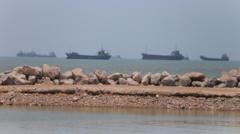
The United States has lifted its naval blockade against Iran following the signing of an agreement aimed at concluding the conflict in the Middle East. This move was confirmed by US Central Command on X, stating it was "in accordance with the President's direction." The lifting of the blockade marks a significant step in the implementation of the new understanding between the two nations.
Differing Perspectives on the Agreement
Despite the agreement, Iran's Supreme Leader, Mojtaba Khamenei, expressed a "different view" on the circumstances surrounding the deal. In a statement published by Iranian media, Khamenei suggested that US President Donald Trump entered the agreement "out of desperation." He also noted that while he initially disagreed with the deal, he permitted it to proceed after receiving assurances from Iranian President Masoud Pezeshkian. This marks the first public commentary from the Supreme Leader since assuming office in March.
"Trump, out of desperation, used all kinds of leverage to bring this about."
Mojtaba Khamenei, Iran's Supreme Leader
Key Provisions and US Stance
The memorandum of understanding (MoU) outlines several critical points, including an immediate cessation of military operations across all fronts and the reopening of the Strait of Hormuz. US Vice-President JD Vance defended the agreement, emphasizing that Iran would not receive financial aid or sanctions relief unless it fully adheres to its obligations. These obligations include destroying its stockpile of enriched uranium and ceasing support for proxy groups in the region.
Vance stated that the deal has initiated a 60-day period for further negotiations, with technical talks expected to take place in Switzerland. He acknowledged the complexities of engaging with Iran, describing it as "not an easy country."
Ceremony Cancellation and Regional Reactions
Initially, an official signing ceremony for the MoU was scheduled for Friday in Switzerland. However, mediator Pakistan informed the BBC that the ceremony was canceled because the agreement had already been signed remotely. Despite this, US and Iranian representatives are still anticipated to meet in Switzerland for ongoing discussions.
In response to Khamenei's comments, President Trump posted on Truth Social, expressing expectations for a ceasefire "on all fronts," including between Israel and Hezbollah in Lebanon. He also urged Middle Eastern countries to uphold their commitment to facilitating negotiations.
Israeli Prime Minister Benjamin Netanyahu underscored the importance of maintaining strong ties with the US, stating that Washington had stood "shoulder to shoulder" with Israel during the conflict. His remarks followed criticisms of the deal from members of his cabinet. Vice-President Vance, addressing these critics, urged them to "wake up and smell the reality," specifically naming Israeli National Security Minister Itamar Ben Gvir and Finance Minister Bezalel Smotrich as opponents. Vance questioned their alternative proposals, highlighting Israel's position as a country of nine million people and suggesting that military solutions alone cannot resolve all national security issues.
Continued Tensions Despite Agreement
Despite the US-Iran agreement, which includes a commitment to end conflict "on all fronts" and a $300 billion fund for Iran's reconstruction (without mandatory US contributions), strikes have reportedly continued between Israel and Hezbollah. Israel maintains that its conflict with Hezbollah is distinct from its war with Iran, while Hezbollah has rejected the terms of the deal.
Source: US lifts naval blockade as Iran's supreme leader says Trump made deal 'out of desperation'