
Ukraine Seeks Enhanced Air Defense Capabilities
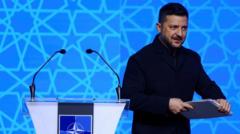
During a NATO summit held in Turkey, Ukrainian President Volodymyr Zelensky made a fervent plea to allied nations for critical air defense systems. His address highlighted Ukraine's capacity to manage most aspects of its defense independently, but stressed the indispensable need for international support in bolstering its air defense infrastructure against escalating Russian assaults.
Intensified Russian Strikes Prompt Urgent Call for Aid
Zelensky's request comes with heightened urgency following recent Russian missile attacks on Kyiv, which resulted in significant civilian casualties and damage to residential buildings. These strikes underscore the persistent threat posed by ballistic missiles, which Ukraine's current defenses struggle to intercept effectively.
The summit also provided an opportunity for President Zelensky to meet with Donald Trump, where he intended to argue that Russia's aggressive actions are indicative of weakness rather than strength, advocating for international pressure to facilitate a 'dignified' peace settlement.
Ukraine's Counter-Offensive and Russian Vulnerabilities
Concurrently, Ukraine has intensified its long-range drone attacks against Russian targets, including oil refineries and military installations. These strikes have reportedly led to fuel shortages and power disruptions within Russia. Moscow's mayor, Sergei Sobyanin, reported that most of the 430 unmanned aerial vehicles launched by Ukraine towards the capital were intercepted, though the full extent of the damage remains unclear. Social media has shown evidence of fuel rationing and queues in Russia, suggesting the impact of these strikes.
NATO Secretary General Mark Rutte, prior to the summit, encouraged member states to contribute adequately to ensure Ukraine receives necessary resources for its sovereignty defense, noting Ukraine's efforts in 'changing the dynamic on the battlefield'.
Despite Ukraine's successes with drone intercepts, the inability to counter Russian ballistic missiles remains a critical concern. On a recent occasion, Ukraine's air force reported successfully intercepting almost all drones, but failed to stop any ballistic missiles, highlighting a significant gap in its defense capabilities. These missiles, traveling at extreme speeds, are particularly challenging to intercept, and Ukraine's supply of US-made Patriot systems is insufficient to counter them comprehensively.
The Global Shortage of Patriot Systems and Future Strategies
President Zelensky expressed frustration over the global production capacity for air defense systems, calling it 'absurd' that it hasn't scaled up to meet the demands of protecting populations from ballistic threats. He has urged European allies to provide their Patriot missile stockpiles, arguing that these systems are more valuable in active defense than in storage.
However, Patriot systems are in limited supply globally, and their effectiveness against a continuously escalating ballistic threat is a concern. Consequently, Zelensky has also discussed the possibility of Ukraine developing its own equivalent systems with NATO assistance.
Accusations of Terrorism and Influence Campaigns
While Russia has historically targeted Ukraine's civilian infrastructure, Moscow now accuses Kyiv of 'terrorism' for its drone attacks on Russian oil refineries. Zelensky characterizes Ukraine's actions as an 'influence campaign' aimed at pressuring Russia into peace negotiations on terms acceptable to Kyiv, which exclude ceding the entire Donbas region.
Recent high-profile Ukrainian drone strikes include an oil terminal in St. Petersburg, a refinery in Moscow, and a confirmed hit on a refinery in Omsk, Siberia, located 2,500 km from Ukraine's border. The Omsk strike, in particular, suggests significant vulnerabilities in Russia's air defense capabilities due to the long flight path of the drone.
Ukraine's campaign also extends to Crimea, where drone attacks on military logistics, oil refineries, and power plants are reportedly causing widespread power outages, fuel and food shortages, and have led to an official state of emergency. A local resident described the situation as 'catastrophic', drawing parallels to the turbulent post-Soviet era.
These developments aim to convince NATO and potentially Donald Trump that Ukraine is gaining momentum and that sustained pressure, with international support, could compel Russia to engage in genuine peace talks. Despite a recent 90-minute phone call between Trump and Putin, Kyiv remains focused on ending the conflict swiftly, through 'strength or diplomacy,' before the onset of another harsh winter. Zelensky maintains that more interceptor missiles are crucial for protecting Ukrainian cities and civilians to achieve this objective.
Source: Zelensky presses Nato for air defence systems after intense Russian strikes